


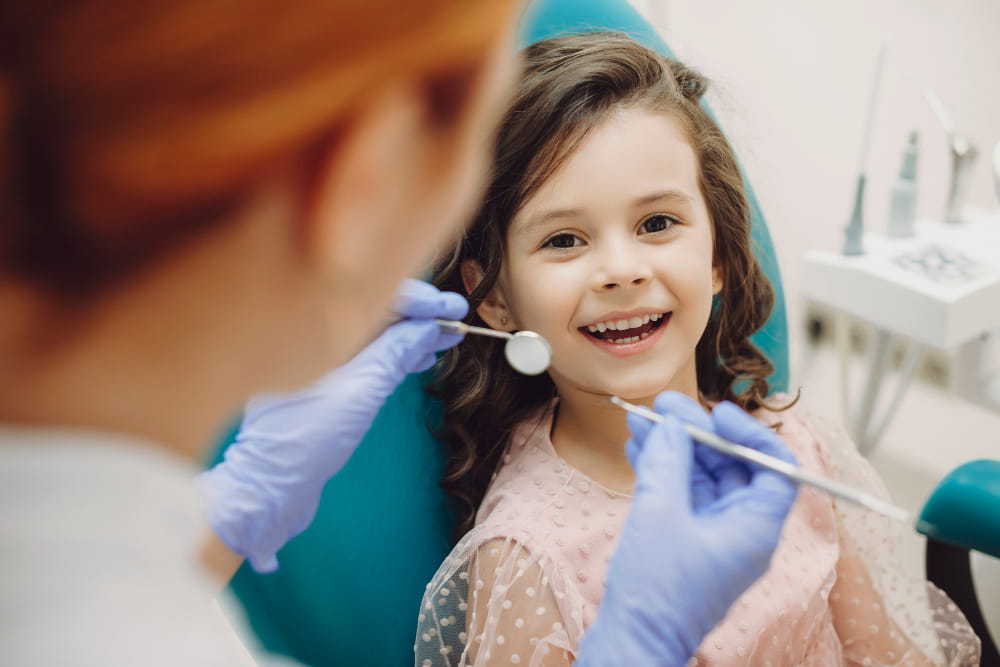
Pediatric Orthodontics
Pediatric orthodontics is the field of dentistry that aims to evaluate the alignment of teeth, the relationship between the jaws, and oral development in children, in order to guide potential future bite problems at an early stage. This approach does not merely aim for straight-looking teeth. The main goal is to support the formation of a healthy oral structure by addressing many important functions together—such as chewing, speaking, breathing, jaw development, and facial aesthetics. Orthodontic evaluations performed during childhood allow certain problems to be detected before they grow. This can reduce the need for more difficult, longer, or more complex treatments in the future.
Orthodontic problems in children are not limited to crooked teeth. Many conditions fall within the scope of pediatric orthodontics, such as mismatched growth of the upper and lower jaws, early loss of baby teeth, habits like thumb sucking, mouth breathing, crossbite, open bite, or forward-positioned teeth. Therefore, orthodontic evaluation is important not only after the teeth have erupted but also while jaw development continues, because some problems can be managed much more effectively during the growth period.
In pediatric orthodontics, braces are not applied to every child immediately. A major part of this field involves monitoring at the right time and intervening when necessary. While regular follow-up is sufficient for some children, others may need space maintainers, removable appliances, jaw-guidance applications, or more advanced orthodontic planning. The goal is not to apply the same treatment to everyone, but to manage the problem at the right time by using the advantages of the growth period.
Early orthodontic evaluation becomes especially important when the permanent front teeth begin to erupt. However, certain habits, jaw narrowness, or bite problems can also be noticed at younger ages. Therefore, families should not consider orthodontics only when the teeth “look very crooked.” Sometimes an issue that is not very noticeable from the outside may be functionally significant.
In short, pediatric orthodontics is not merely an area of aesthetic correction; it is an important specialized approach that guides oral structure during the growth and development period. Early evaluation can help keep certain problems under control more easily, guide oral development more healthily, and reduce the future treatment burden. Properly timed orthodontic guidance in pediatric dentistry positively affects not only tooth alignment but also overall oral function.
What Is Pediatric Orthodontics?
Pediatric orthodontics is an orthodontic approach that involves evaluating and, when necessary, guiding the alignment of teeth, jaw positions, bite relationships, and oral functions during childhood and the growth period. The main goal of this field is to detect existing orthodontic problems early and ensure healthier oral–jaw development by using the child’s growth potential. In other words, pediatric orthodontics is not just about straightening crooked teeth; it also includes the development of the jaw structure and the functional balance of the bite. Orthodontic problems in children can appear in many different forms. Crowding of the teeth, excessive spacing, protrusion of the upper front teeth, the lower jaw being positioned backward or forward, crossbite, open bite, and midline deviations are some of these issues. Additionally, habits such as thumb sucking, prolonged pacifier use, mouth breathing, and tongue thrusting can also affect orthodontic development. Pediatric orthodontics evaluates not only the visible alignment of teeth but also the causes of these problems and how they may progress in the future. One of the most important features of this field is the ability to use the growth period as an advantage. In adult orthodontics, bone development is complete. However, in children, the jaws are still developing. Therefore, certain jaw-relationship problems can be guided more effectively during childhood. This is why cases requiring early intervention are important. However, this does not mean that every child needs active orthodontic treatment at an early age. Sometimes regular monitoring is the best approach. The main areas addressed by pediatric orthodontics include:- Tooth alignment disorders
- Jaw development mismatches
- Bite problems
- Space loss due to early loss of baby teeth
- Habit-related oral structure problems
- Problems related to eruption direction and eruption sequence
How Is Pediatric Orthodontics Performed?
Pediatric orthodontic treatment begins with a detailed evaluation. The first stage involves examining the child’s tooth alignment, jaw relationships, bite pattern, eruption status of primary and permanent teeth, habits, and growth profile. In addition to clinical examination, panoramic X-rays, cephalometric analysis, intraoral photographs, and dental impressions may be taken if needed. These records are important not only for understanding how the problem appears today but also for predicting how it may progress. Orthodontic treatment is not performed the same way for every child, because treatment in pediatric orthodontics is shaped according to the problem. Some children need only follow-up. Some require a space maintainer due to early loss of baby teeth. In some cases, jaw development is guided with removable appliances or habit-breaking devices. For more advanced alignment problems, fixed orthodontic treatment is considered when timing is appropriate. Therefore, there is no “one type of treatment” in pediatric orthodontics; rather, there is an individualized plan suited to the growth phase. The treatment process generally follows these steps:- Clinical orthodontic examination
- Taking X-rays and records if needed
- Evaluation of jaw and tooth development
- Deciding on treatment or follow-up based on the problem type
- Planning the appropriate appliance
- Monitoring the process with regular check-up appointments
Who Is Suitable for Pediatric Orthodontics?
Children suitable for pediatric orthodontics are those who require evaluation and, if necessary, intervention due to tooth alignment, bite relationships, jaw development, or oral habits. What matters is not only whether the teeth appear crooked. Some problems that are not very apparent externally may still be significant from an orthodontic standpoint. Therefore, suitability is assessed based not only on aesthetic appearance but also on functional development and growth. Children with noticeably protruding upper front teeth, reverse bite between upper and lower teeth, crossbite, open bite, or discrepancies between the positions of the upper and lower jaws are suitable for orthodontic evaluation. Additionally, children who experience early loss of baby teeth, have disrupted eruption sequences, jaw crowding, or lack of adequate space for permanent teeth fall into this group. Habits such as thumb sucking, prolonged pacifier use, mouth breathing, or tongue thrusting also affect orthodontic development and should prompt early evaluation. Situations suitable for pediatric orthodontics include:- Crowding or significant spacing of the teeth
- Excessive protrusion of upper teeth
- The lower jaw appearing behind or ahead of the upper jaw
- Presence of crossbite
- Development of open bite
- Space problems after early loss of baby teeth
- Habits such as thumb sucking or pacifier use
- Mouth breathing and related developmental effects
Precautions to Take Before Pediatric Orthodontics
Precautions taken before pediatric orthodontics are important for establishing an accurate diagnosis and a healthy treatment plan. First, decisions should not be made based solely on the appearance of the child’s teeth. A detailed orthodontic evaluation must be performed, examining tooth alignment, bite relationships, jaw development, eruption patterns, and any habits. When necessary, X-rays, photographs, and impressions should be taken for a more comprehensive analysis. This preparation helps determine whether treatment is truly needed and, if so, the optimal timing. Good oral hygiene is important before orthodontic evaluation because planning orthodontic treatment while active cavities, gum problems, or untreated oral issues are present may not be appropriate. Especially when fixed orthodontic treatment is considered, cavities must be treated and gum health restored beforehand. Therefore, a pediatric dental check-up is often necessary before orthodontics. Key points to consider before treatment include:- A detailed examination and necessary records should be taken
- Cavities and gum problems should be evaluated first
- Oral hygiene should be improved
- Habits such as thumb sucking or mouth breathing should be reported to the dentist
- The history of early baby tooth loss should be shared
- The family should understand that treatment requires timing and cooperation
Precautions to Take After Pediatric Orthodontics
Precautions taken after pediatric orthodontics vary depending on the type of treatment applied. However, the common goal is to maintain the achieved result, ensure proper oral hygiene, and continue monitoring development. In pediatric orthodontics, “after” does not always mean that treatment is completely finished. Sometimes the active appliance phase ends, but growth monitoring continues. Since jaw development continues in children, regular follow-up is necessary to ensure that the achieved result remains stable. If the child has undergone fixed orthodontic treatment, the retention phase becomes important after braces are removed. If a removable appliance has been used, post-appliance follow-up and protective use may be necessary. If only early guidance treatment was performed, monitoring is required to determine whether a second stage will be needed later. Thus, the post-treatment process is as valuable as the treatment itself. Key points to consider after treatment include:- Regular check-up appointments should not be missed
- Retention appliances should be used as recommended
- Oral hygiene must be maintained
- Hard foods and habits that may damage appliances should be avoided
- Habits such as thumb sucking or mouth breathing should be reassessed
- Newly erupting teeth should be monitored
In Which Situations Is Pediatric Orthodontics Applied?
Pediatric orthodontics is applied in cases where there is a disorder in tooth alignment, jaw relationships, or oral functions. One of the most common reasons is crowding, but the scope of pediatric orthodontics is much broader. Bite problems, deficiencies or excesses in jaw development, improper eruption positions of teeth, space problems following early loss of baby teeth, and developmental effects caused by habits are also important application areas. Crossbite, in particular, can be very important for guiding growth if detected early. Similarly, open bite, excessive protrusion of upper teeth, or a retrusive lower jaw also require early orthodontic evaluation. Some problems can be managed more effectively during the child’s growth period, which can help prevent or reduce the extent of more extensive treatments in the future. The main conditions treated by pediatric orthodontics include:- Crowding
- Abnormal spacing between teeth
- Crossbite
- Open bite
- Deep bite
- Protrusive upper front teeth
- Developmental discrepancies between the upper and lower jaws
- Space loss due to early loss of baby teeth
- Habit-related issues such as thumb sucking, pacifier use, or tongue thrusting
- Problems related to eruption direction and eruption sequence
How Long Does the Pediatric Orthodontics Procedure Take?
The duration of pediatric orthodontic procedures varies greatly depending on the type of problem, the child’s age, the stage of growth, and the method used. Therefore, it is not accurate to provide a single standard duration. While some children only require evaluation and monitoring, others may need several months of habit-breaking or guidance appliance use. More comprehensive orthodontic correction can take longer. The primary factor determining duration is not just the appearance of the teeth but the underlying issue. The initial evaluation appointment is usually completed in a short time. However, examination, record taking, X-ray evaluation, and planning may occur during this visit. Once a decision for active treatment is made, the process begins according to the type of appliance required. Preventive applications like space maintainers can be planned quickly, whereas appliances guiding jaw development typically require months of use and follow-up. Fixed orthodontic applications require even longer-term monitoring. The main factors that affect duration include:- Whether the problem is dental or jaw-related
- Whether the treatment involves early guidance or comprehensive correction
- Whether removable or fixed appliances are used
- The child’s growth stage
- Consistency of appliance use
- Compliance with follow-up appointments
- Initial orthodontic evaluation: short examination and record-taking
- Space maintainers or simple preventive applications: short planning and regular follow-up
- Removable appliance treatments: typically months of use and check-ups
- More comprehensive orthodontic treatments: longer-term planning depending on the problem
Pediatric Orthodontics Prices
Pediatric orthodontics prices vary depending on the type of problem, the treatment method to be used, the nature of the appliance, treatment duration, and frequency of follow-ups. Therefore, it is not accurate to specify a fixed fee for every child. Since there is no single type of treatment in pediatric orthodontics, some children only need monitoring, while others may require space maintainers, removable appliances, habit-breaking therapy, or more comprehensive orthodontic treatments. Thus, the cost is determined directly based on the scope of the treatment. Early orthodontic evaluation may sometimes make families think, “Will this create extra expenses already?” However, the purpose of pediatric orthodontics is often to detect bigger problems early. In some cases, timely small interventions can prevent longer and more complex treatments in the future. Therefore, cost should be evaluated not only as the price of the current procedure but also as its long-term preventive value. The main factors that affect cost include:- Whether the problem is dental or jaw-related
- The type of appliance used
- The length of treatment
- The frequency of follow-up appointments
- Whether treatment is single-stage or multi-stage
- The location and service standards of the clinic
My Happy Patients
Patient Reviews
5 yaşındaki oğlumun diş tedavisi için çok endişeliydim ama doktorumuz sayesinde her şey beklediğimden çok daha güzel geçti. Sedasyonla hiçbir şey hissetmeden, korkmadan tedavisini oldu. Çocuğuma yaklaşımı, sakinliği ve güler yüzü bizi çok rahatlattı. Hem oğluma hem bize güven verdiğiniz için size çok teşekkür ederiz, iyi ki yollarımız kesişmiş.
M.K.
Лучший русскоязычный детский стоматолог в Анталье! Очень деликатный и профессиональный подход к маленьким деткам. После приема все дети уходят действительно довольные и очень счастливые. Огромное спасибо нашему дорогому доктору за такую добросовестную работу и искреннюю любовь к своим маленьким пациентам! 🌸🌸🌸
I.P.
Мои дети совсем не боятся ходить к стоматологу, потому что у нас есть замечательный врач Раиса. Мы точно знаем, что нам всегда будет оказана самая квалифицированная помощь. Кроме того, Раиса умеет находить подход к детям, она очень спокойная, чуткая и добрая. Мы очень любим нашего стоматолога и всегда доверяем только ей.
❤️
A.P.
Kızım 8 yaşında ve asla bir diş hekimine götüremiyorduk.
Çok korkuyordum nasıl oturtacağız o koltuğa?!
Raisa hanımın yaklaşımı ve kızımla uyum sağlamasına inanamadım. Asla huysuzluk yapmadan oturdu o koltuğa.
Çok çok teşekkürler Doktor hanım❤️Emeğiniz ilginiz alakanız için çok teşekkür ederiz
D.A.
Выражаем наше большое спасибо доктору за невероятную заботу и очень внимательное отношение к нам! Лечение зубов под седацией прошло на удивление спокойно, и наш ребёнок совсем не боялся процесса. Мы очень сильно благодарны вам за ваш высокий профессионализм, доброту и чуткость. Вы настоящий мастер своего дела, который умеет найти
Д.я.
У сына разболелся зуб. Обратилась к доктору Раисе в Коньялты. После лечения захотелось написать отзыв. Ребёнку шесть лет, он очень боится врачей, но здесь страх сразу исчез. Всего были в клинике три раза, лечили каналы. Доктор всё показала и доходчиво объяснила. Она очень внимательная и чуткая. Нам повезло!
Л.Б.
Oğlumu 9 yaşında dişlerini kolay kolay bakıtmaz yaptırmaz diş hekimlerinden korkar ve özel eğitimli bir çoçuk bir kaç doktor gezdik asla bakıtmadı RAİSA HANIM tanıştıktan sonra korkularımız azaldı
diş amaliyat Raisa hanım yaptı
Başta diş hekimi Raisa hanıma sonra ekibine çok teşekkür ederim ☺️ 🙏 Tedavi olmak isteyen herkese tavise ederim
N.Y.
Это был первый визит моего ребёнка к стоматологу. Мы были на отдыхе и очень переживали, но доктор Раиса Ахмадова оказалась просто волшебником! Она спокойно объяснила процесс, шутила и вовлекла ребёнка. Всё прошло настолько легко и позитивно, что ребёнок полностью расслабился. Огромное спасибо за ваше внимательное о
I.A.
Kızımın diş tedavisi için düzenli olarak Dr. Raisa Ahmedova'ya gidiyoruz ve her seferinde inanılmaz memnun kalıyoruz. Kendisi hem çok profesyonel hem de çocuklarla inanılmaz ilgili ve sabırlı. Kızım dişçi koltuğuna oturmaktan çekiniyordu ama Raisa hanımın sıcak yaklaşımı sayesinde hiç korkmadan tedavisini tamamladı. İşini büyük bir özenle ve titizlikle yapıyor.
R.G.
Çocuk ruhuna hitap eden, muhteşem bir diş hekimi.Başka bir klinikte ağlayarak koltuğa oturduğu için hemen ameliyatli tedaviye yönlendirilen oğlum Raisa hanım sayesinde gayet sakin bir şekilde dolgusunu yaptırdı.Asistani da oğluma destek oldu, ekip olarak muhteşemler .... Birçok dişi tedavi edilmesi gereken oğlum "anne ben tekrar gelirim bu doktora " dedi.
N.Ç.
Oğlumun diş ağrısı vardı. Fotoğrafta Türkçe adı yazılı olan klinikte Dr. Raisa'ya gittim (Türkçe bilmiyorum :)). Konyaaltı bölgesinde. Tedaviden sonra bir yorum yazmak istedim. Anlarsınız, 6 yaşında bir çocuk doktorlardan korkar. Ama ilk ziyaretten sonra artık korkmuyordu. Toplamda üç kez kliniğe gittik. Dişi kurtarmak için kanal tedavisi yaptılar. Herşey için teşekkürler
H.İ
Contact Us!
We’re here to help with all your questions and requests.
-
Toros Mah. 805 Sk. Kurgu 1 Plaza No: 14/1 KONYAALTI/ANTALYA