


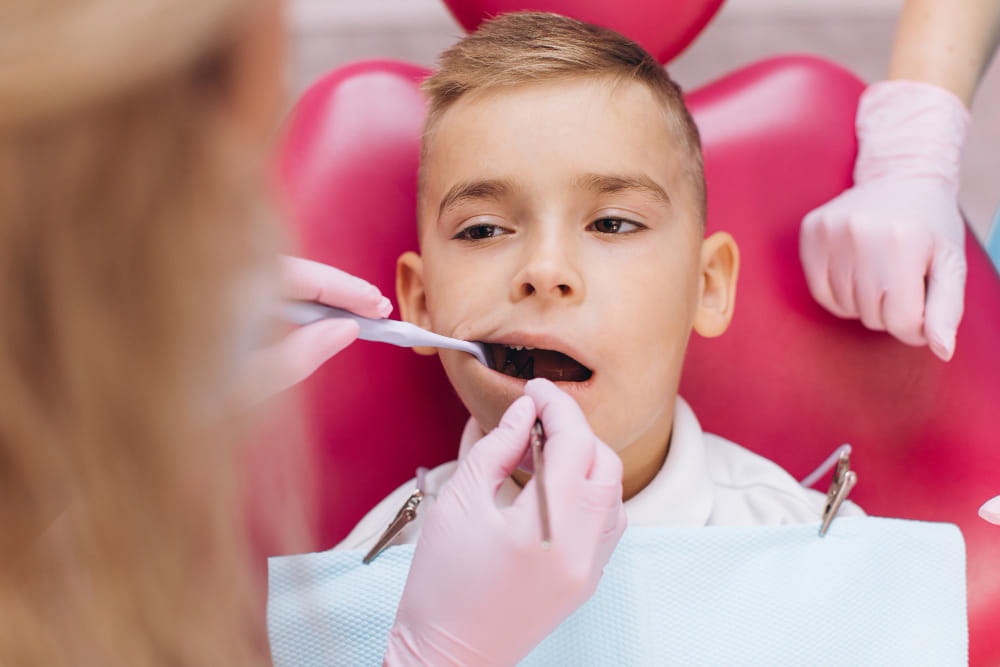
Dental Calculus Removal
Dental calculus cleaning is the procedure of removing hardened bacterial plaque that accumulates on tooth surfaces and along the gumline using special instruments. Although it is not performed as frequently in pediatric dentistry as in adults, it is highly beneficial when needed. Plaque that remains in the mouth for a long time without being cleaned gradually mineralizes and turns into tartar. This buildup does not only create an aesthetic problem; it can also lead to gum bleeding, bad breath, gum sensitivity, and sometimes early periodontal issues. This condition is seen more often in children undergoing orthodontic treatment, those with poor oral hygiene, and individuals prone to buildup due to the intense flow of saliva on the inside surfaces of the lower front teeth.
Tartar is a hard structure that cannot be removed with a toothbrush. No matter how carefully teeth are brushed at home, once plaque becomes mineralized, professional cleaning is required. Families sometimes notice this as “the stains don’t come off with brushing.” In some children, a yellow, brown, or chalky hard layer is seen along the gumline. Bleeding begins during brushing, bad breath increases, and as the child avoids brushing, a vicious cycle forms. At this point, professional dental cleaning provides a good start to restoring oral care.
The purpose of the procedure is not to whiten the teeth but to support gum health. However, once tartar and surface stains are removed, the teeth naturally look cleaner and brighter. Here is the important distinction: tartar cleaning does not damage the teeth; on the contrary, it helps the gum tissue reattach more healthily. The real harm comes from allowing tartar buildup to remain in the mouth. If left untreated, gum inflammation can become chronic, and children’s brushing habits can deteriorate further.
When planning tartar removal in pediatric patients, age, level of cooperation, gum condition, and the presence of orthodontic appliances are evaluated. In some cases, a simple superficial cleaning is sufficient, while in others, a detailed care plan combined with hygiene education is necessary. Because cleaning alone is not a permanent solution; the underlying cause of tartar formation must also be addressed. Brushing technique, floss use, eating habits, and routine check-ups must all be considered together. Otherwise, the cleaned surfaces may show the same buildup again within a few months.
What Is Dental Calculus Cleaning?
Dental calculus cleaning is the professional removal of hardened plaque deposited on the teeth and along the gumline. In daily oral hygiene, plaque first forms on tooth surfaces. Plaque is a sticky biofilm composed of bacteria, salivary proteins, and food debris. When regular brushing and interdental cleaning are neglected, this layer matures within 24 to 72 hours and gradually hardens into dental calculus through the minerals in saliva, such as calcium and phosphate. Once hardened, it can no longer be removed completely with regular home brushing. Although tartar formation in children may be more limited compared to adults, it is not correct to say it never occurs. Buildup is observed more frequently on the tongue-side surfaces of the lower front teeth and the cheek-side surfaces of the upper molars. This is because the salivary glands are close to these areas. Minerals in saliva precipitate on plaque, accelerating calcification. In children wearing orthodontic brackets, the number of surfaces that are hard to clean increases, making plaque accumulation much easier. Tartar removal should not be viewed merely as scraping away hard deposits. This procedure is important for protecting gum health and reducing the risk of inflammation. The surface of tartar is rough. This roughness facilitates the retention of new plaque. In other words, the longer tartar remains in the mouth, the more it not only worsens the existing issue but also provides a suitable environment for new buildup. When tartar stays on the gumline, it is accompanied by redness, swelling, bleeding during brushing, and bad breath. Over time, gum problems may deepen. Families sometimes believe that tartar cleaning thins the enamel or creates gaps between teeth. This is a common but incorrect belief. What actually happens during cleaning is the removal of tartar adhered to the tooth surface. If the tartar has filled the spaces between teeth, the natural gaps become visible after cleaning. In other words, the procedure does not create the gap; it simply makes a preexisting space noticeable. Leaving tartar in the mouth out of fear of damaging the enamel can lead to far more serious gum issues. Clinically, tartar cleaning is an important step for controlling gum inflammation, reducing bad breath, maintaining oral hygiene in children undergoing orthodontic treatment, and providing professional hygiene education. It is not a miracle cure on its own. For it to be effective, it must be supported by daily care habits. If we perform cleaning in the clinic but fail to teach the child and family the correct brushing technique, we leave the job half done. Because the problem is not only the accumulated tartar but also the habits that caused it.How Is Dental Calculus Cleaning Performed?
Tartar cleaning is performed in the clinic using special hand instruments and ultrasonic devices. Before the procedure, gum condition is assessed: whether there is bleeding, where tartar is most intense, whether surface stains are present, and whether orthodontic appliances make oral hygiene difficult. Evaluation is especially important in pediatric patients because sometimes tartar is not the only issue—gum inflammation, early cavities, or improper brushing habits may accompany the condition. Cleaning usually begins with an ultrasonic scaler, a vibrating device. This instrument uses high-frequency vibrations and water spray to loosen and remove tartar attached to the tooth surface. The water keeps the tip cool and helps flush away detached tartar fragments. Because tartar accumulation in children is usually not as heavy as in adults, the process may be completed more quickly. In sensitive areas or between teeth, fine cleaning is performed with hand instruments if needed. After tartar is removed, tooth surfaces are smoothed with a polishing procedure. Polishing is done using special rubber cups and prophylaxis pastes. The aim is not only to provide shine. Rough surfaces accelerate new plaque buildup. The smoother the surface, the easier it is to keep clean with daily brushing. Some children may have external stains caused by tea, colored drinks, poor brushing, or iron supplements. Polishing can reduce some of these stains as well. Pain during the procedure is usually minimal. However, if the gums are significantly inflamed, if the tartar has accumulated under the gumline, or if the child is very sensitive, mild discomfort may occur. Most children tolerate tartar cleaning far more easily than fillings or root canal treatments. With proper communication, the procedure is much easier than they expect. Sometimes we explain it to children as “cleaning the hard dirt on the teeth,” which is more understandable than technical terminology. If necessary, fluoride application or hygiene instruction may be added after the procedure. This is especially important for children with brackets; merely cleaning is not enough. The type of toothbrush, use of interdental brushes, and how to clean specific areas must be explained. A simple, clear routine works best. If the child and family know exactly what to do, the effect of the treatment lasts longer. Tartar cleaning is usually completed in a single session. For mild buildup, 15–20 minutes may be enough. For more extensive tartar and stains, the duration may extend to 30–40 minutes. If there is advanced gum disease, the procedure may go beyond simple surface cleaning and require more detailed periodontal assessment. This is less common in children but should not be overlooked, especially in the presence of systemic conditions or very poor hygiene.Who Is Suitable for Dental Calculus Cleaning?
Tartar cleaning is suitable for children and adolescents who have mineralized plaque buildup on their teeth and would benefit from professional cleaning. Not every child needs frequent tartar cleaning. The decision is based on oral hygiene level, tendency to develop tartar, gum condition, and risk factors. Children with hard, yellowish or brownish deposits along the gumline, frequent bleeding during brushing, complaints of bad breath, and signs of gum inflammation are suitable candidates. Children undergoing orthodontic treatment form a special group. Fixed brackets, wires, and additional appliances make plaque control difficult. These children can develop tartar and surface stains more easily. If regular cleaning is not done, not only gum problems but also white spot lesions and new cavities may develop around the brackets. Therefore, during orthodontic treatment, the need for professional cleaning significantly increases for some children. Children with inadequate oral hygiene and those who have not yet established proper brushing habits may also be suitable. In such cases, the procedure is not only for cleaning but also provides an opportunity for oral hygiene education. The child may think they are brushing well, but gumline and back areas may be neglected. When plaque staining and brushing instruction are provided after cleaning, these areas become visible, and the child learns much faster. Common situations in children who are suitable candidates for tartar cleaning include:- Visible tartar buildup along the gumline
- Frequent gum bleeding during brushing
- Bad breath
- Redness and swelling of the gums
- Plaque-retentive areas due to orthodontic brackets
- Heavy tartar formation on the inside surfaces of lower front teeth
- Surface stains with rough tooth surfaces
Precautions to Take Before Dental Calculus Cleaning
The precautions to be taken before tartar cleaning are quite simple but increase comfort during the procedure. Children do not need to come to the appointment very hungry. It is better if they come after a light meal. Hunger can cause irritability, while a very heavy meal can increase nausea. Brushing teeth before the appointment is also beneficial. This makes clinical evaluation easier and reminds the child of the importance of oral care. Parents must share the child’s medical history. Bleeding disorders, heart disease, immune-related conditions, regularly used medications, and allergies must be reported to the dentist. Although tartar cleaning is usually a simple procedure, the approach may vary in certain health conditions. If there is a history of severe gum bleeding, frequent infections, or systemic illness, a more careful evaluation is required. Explanations made to the child before the procedure should be simple. Phrases like “they will scrape your teeth” may cause unnecessary fear. Expressions such as “they will clean the hard dirt on your teeth” or “a care procedure that will soothe your gums” are more reassuring. Managing expectations is important. Children who roughly know what will happen tend to remain calmer in the chair. Key points to consider before the procedure include:- Coming to the clinic after a light meal
- Having teeth brushed beforehand
- Sharing medical history and medications
- Reporting allergies and bleeding tendencies
- Avoiding frightening words for the child
- Informing the dentist if orthodontic appliances are present
Precautions to Take After Dental Calculus Cleaning
The precautions to be taken after tartar cleaning are important for maintaining gum comfort and prolonging the effect of the cleaning. After the procedure, especially in children with gum inflammation, mild sensitivity or short-term tenderness may occur. This is usually temporary. When tartar stays on the gumline for a long time, the area becomes chronically irritated; once the tartar is removed, the tissue begins to heal. Mild bleeding on the first day is possible in sensitive gums. Avoiding very hot, very cold, or highly acidic foods and drinks for the first few hours is beneficial. These can increase discomfort in children with gum sensitivity. If surfaces feel more exposed after polishing, this is usually temporary. Once the areas previously covered by tartar are cleaned, the child becomes more aware of the tooth surface. Oral hygiene is the key factor. Pausing brushing after tartar cleaning is a major mistake. On the contrary, regular cleaning of teeth and gumlines is necessary. A soft-bristled toothbrush should be used for gentle but effective cleaning. For children in orthodontic treatment, interdental brushes and special cleaning tools become even more important. A single session of professional cleaning does not provide a permanent solution if daily hygiene is inadequate. Post-procedure precautions can be summarized as follows:- Avoid very hot and very cold foods for the first few hours
- Do not skip brushing routines
- Mild gum bleeding may occur for a few days; if it increases, seek evaluation
- Limit consumption of colored and acidic beverages
- Maintain detailed cleaning if orthodontic appliances are present
- Do not skip follow-up appointments
In Which Situations Is Dental Calculus Cleaning Performed?
Tartar cleaning is performed when hard plaque buildup that cannot be removed by brushing forms on tooth surfaces. The most obvious sign is yellow-cream or occasionally brown hard layers along the gumline or on the inside surfaces of the lower front teeth. These deposits are often accompanied by gum bleeding, bad breath, and gum redness. When a child begins saying “I don’t brush because it bleeds,” the issue may have progressed further. In reality, the gums bleed not because the child brushes but because they are not brushed enough. Tartar cleaning is more frequently needed in children undergoing orthodontic treatment. Plaque accumulates easily around brackets, and uncleaned areas can harden into tartar. In these children, professional cleaning is performed not only for esthetics but also to maintain gum health and prevent cavities. If white spot lesions, gum swelling, and bad breath appear around brackets, the procedure becomes even more necessary. Main situations where tartar cleaning is performed include:- Visible hard tartar buildup along the gumline
- Frequent and repeated bleeding during brushing
- Red and swollen gums
- Bad breath
- Heavy plaque-tartar buildup due to orthodontic appliances
- Surface stains that can be improved with polishing
- Rough tooth surfaces due to poor oral hygiene
How Long Does the Dental Calculus Cleaning Procedure Take?
The duration of the tartar cleaning procedure depends on the amount of buildup, gum sensitivity, the intensity of accompanying stains, and the child’s level of cooperation. In children with mild tartar accumulation, the procedure can be completed within 15 to 20 minutes. In cases with moderate tartar and surface stains, this can extend to 20 to 30 minutes. In patients with orthodontic brackets, cleaning detailed areas and adding hygiene instruction can bring the total clinical time to 30 to 45 minutes. The determining factor is not only the amount of tartar. The child’s reaction to the water sound and vibrating device also matters. Some children find these sounds strange at first but get used to them within a few minutes. Some may need breaks. Being quick in pediatric dentistry is good, but rushing is another matter. If areas along the gumline are skipped, the procedure may be short, but its effectiveness will also be short-lived. Tartar removal is typically finished in a single session. No additional procedures are required in mild cases. In children with heavy plaque buildup, a few more minutes may be allocated for proper brushing instruction after the cleaning. This instruction is actually part of the treatment. If the child and family do not understand how to provide proper care, the time spent today may lead back to the same problem in a few months. General duration estimates are as follows:- Mild tartar buildup: 15–20 minutes
- Moderate tartar and stains: 20–30 minutes
- Bracketed patients or those needing detailed hygiene education: 30–45 minutes
Dental Calculus Cleaning Prices
Prices for tartar cleaning vary depending on the extent of the procedure, intensity of buildup, the child’s oral condition, and whether polishing or additional hygiene procedures are included. Providing a single standard price is often misleading. A child with mild superficial tartar does not require the same care as a child undergoing orthodontic treatment with widespread plaque-tartar buildup. This difference directly affects the duration of the procedure, the equipment used, and the clinical approach. One factor affecting pricing is whether the procedure is limited only to tartar cleaning. In some children, additional polishing is required to remove surface stains. In others, detailed hygiene instruction, plaque staining, or fluoride application may be planned. These can be packaged differently in each clinic. Therefore, families should not only ask “how much is tartar cleaning?” but also “what does it include?” Key factors that influence pricing include:- The amount of tartar buildup
- Need for stain removal and polishing
- Presence of orthodontic appliances
- Gum sensitivity and need for additional evaluation
- Equipment used and clinical facilities
- The city and clinic location
My Happy Patients
Patient Reviews
5 yaşındaki oğlumun diş tedavisi için çok endişeliydim ama doktorumuz sayesinde her şey beklediğimden çok daha güzel geçti. Sedasyonla hiçbir şey hissetmeden, korkmadan tedavisini oldu. Çocuğuma yaklaşımı, sakinliği ve güler yüzü bizi çok rahatlattı. Hem oğluma hem bize güven verdiğiniz için size çok teşekkür ederiz, iyi ki yollarımız kesişmiş.
M.K.
Лучший русскоязычный детский стоматолог в Анталье! Очень деликатный и профессиональный подход к маленьким деткам. После приема все дети уходят действительно довольные и очень счастливые. Огромное спасибо нашему дорогому доктору за такую добросовестную работу и искреннюю любовь к своим маленьким пациентам! 🌸🌸🌸
I.P.
Мои дети совсем не боятся ходить к стоматологу, потому что у нас есть замечательный врач Раиса. Мы точно знаем, что нам всегда будет оказана самая квалифицированная помощь. Кроме того, Раиса умеет находить подход к детям, она очень спокойная, чуткая и добрая. Мы очень любим нашего стоматолога и всегда доверяем только ей.
❤️
A.P.
Kızım 8 yaşında ve asla bir diş hekimine götüremiyorduk.
Çok korkuyordum nasıl oturtacağız o koltuğa?!
Raisa hanımın yaklaşımı ve kızımla uyum sağlamasına inanamadım. Asla huysuzluk yapmadan oturdu o koltuğa.
Çok çok teşekkürler Doktor hanım❤️Emeğiniz ilginiz alakanız için çok teşekkür ederiz
D.A.
Выражаем наше большое спасибо доктору за невероятную заботу и очень внимательное отношение к нам! Лечение зубов под седацией прошло на удивление спокойно, и наш ребёнок совсем не боялся процесса. Мы очень сильно благодарны вам за ваш высокий профессионализм, доброту и чуткость. Вы настоящий мастер своего дела, который умеет найти
Д.я.
У сына разболелся зуб. Обратилась к доктору Раисе в Коньялты. После лечения захотелось написать отзыв. Ребёнку шесть лет, он очень боится врачей, но здесь страх сразу исчез. Всего были в клинике три раза, лечили каналы. Доктор всё показала и доходчиво объяснила. Она очень внимательная и чуткая. Нам повезло!
Л.Б.
Oğlumu 9 yaşında dişlerini kolay kolay bakıtmaz yaptırmaz diş hekimlerinden korkar ve özel eğitimli bir çoçuk bir kaç doktor gezdik asla bakıtmadı RAİSA HANIM tanıştıktan sonra korkularımız azaldı
diş amaliyat Raisa hanım yaptı
Başta diş hekimi Raisa hanıma sonra ekibine çok teşekkür ederim ☺️ 🙏 Tedavi olmak isteyen herkese tavise ederim
N.Y.
Это был первый визит моего ребёнка к стоматологу. Мы были на отдыхе и очень переживали, но доктор Раиса Ахмадова оказалась просто волшебником! Она спокойно объяснила процесс, шутила и вовлекла ребёнка. Всё прошло настолько легко и позитивно, что ребёнок полностью расслабился. Огромное спасибо за ваше внимательное о
I.A.
Kızımın diş tedavisi için düzenli olarak Dr. Raisa Ahmedova'ya gidiyoruz ve her seferinde inanılmaz memnun kalıyoruz. Kendisi hem çok profesyonel hem de çocuklarla inanılmaz ilgili ve sabırlı. Kızım dişçi koltuğuna oturmaktan çekiniyordu ama Raisa hanımın sıcak yaklaşımı sayesinde hiç korkmadan tedavisini tamamladı. İşini büyük bir özenle ve titizlikle yapıyor.
R.G.
Çocuk ruhuna hitap eden, muhteşem bir diş hekimi.Başka bir klinikte ağlayarak koltuğa oturduğu için hemen ameliyatli tedaviye yönlendirilen oğlum Raisa hanım sayesinde gayet sakin bir şekilde dolgusunu yaptırdı.Asistani da oğluma destek oldu, ekip olarak muhteşemler .... Birçok dişi tedavi edilmesi gereken oğlum "anne ben tekrar gelirim bu doktora " dedi.
N.Ç.
Oğlumun diş ağrısı vardı. Fotoğrafta Türkçe adı yazılı olan klinikte Dr. Raisa'ya gittim (Türkçe bilmiyorum :)). Konyaaltı bölgesinde. Tedaviden sonra bir yorum yazmak istedim. Anlarsınız, 6 yaşında bir çocuk doktorlardan korkar. Ama ilk ziyaretten sonra artık korkmuyordu. Toplamda üç kez kliniğe gittik. Dişi kurtarmak için kanal tedavisi yaptılar. Herşey için teşekkürler
H.İ
Contact Us!
We’re here to help with all your questions and requests.
-
Toros Mah. 805 Sk. Kurgu 1 Plaza No: 14/1 KONYAALTI/ANTALYA